
Scroll down for the latest politics news and live updates.
Key Events

CommBank CEO expecting mortgage arrears to get worse
The head of Australia’s biggest home lender is expecting more borrowers to fall behind on their mortgage repayments in 2027 with arrears rate already at a 14-year high.
Commonwealth Bank CEO Matt Comyn made the prediction two days after a September quarter trading update revealed 0.8 per cent of borrowers were 90 days or more behind on their repayments.
“Yes, I would expect that to increase,” he told the House of Representatives economics committee on Friday.
“It’s relatively difficult to precisely forecast but I think it’s a reasonable proposition to expect, again contingent on the direction of rates, but one would expect that they are on hold or certainly not lower for an extended period of time.
“I expect that the arrears rate would gradually trend up over the course of at least most of calendar year 2027.”
Mr Comyn said the borrowers falling behind on their mortgage were more likely to be existing customers rather than new ones.
“It also includes both the number of new customers that are in arrears or 90 days overdue as well as how long they’re staying in arrears,” he said.
“A bigger contributor about 10 of that 15 basis points is actually people spending more time in that 90 days versus - it’s not all flow of new customers that are falling behind on their mortgages.”
CommBank CEO apologies for customers being overcharged
The Commonwealth Bank’s chief executive Matt Comyn has apologised to business customers who were overcharged a day after the corporate regulator commenced legal proceedings.
The Australian Securities and Investments Commission alleges that between November 2020 and May 2025, about 42,000 CommBiz customers were overcharged $8.5 million in fees.
“This shouldn’t have happened, we have apologised and we should,” Mr Comyn told the House of Representatives economics committee on Friday.
Mr Comyn said CBA charged its business customers with multiple credit and debit accountants $25.25 instead of $25 as lawfully allowed, with the problem stemming from an old platform two decades ago.
“A little bit of additional context: so what actually happened and of course, it’s difficult to be precise about something that happpened the best part of 20 years ago, but I will do my best,” he said.
“When we rewrote the terms and conditions - obviously it’s difficult to establish exactly what happened but there was an error in the drafting and ultimately the production into our terms and conditions in the interests of trying to simplify the language, which actually had the legal effect of not giving us a legal basis to charge for that contra transaction.”
NAB CEO blasts Labor’s capital gains tax changes
National Australia Bank chief executive Andrew Irvine has slammed Labor for applying the same capital gains tax to businesses as property.
From July next year, the 50 per cent capital gains tax discount is being replaced with a minimum 30 per cent tax and indexation for inflation.
Mr Irvine, the head of Australia’s biggest business lender, said taxing a business at the same rate as an established investment property would discourage innovation, under questioning from independent MP Allegra Spender.
“I can live with the changes to negative gearing and I can live with the changes to capital gains for property,” he told the House of Representatives economics committee on Friday.
“But where I had more concern was the changes to capital gains tax outside of property asset classes.
“If Australia is going to be a more dynamic Australia, I think we need to make sure that risk assets are taxed at lower levels than passive or property assets so I would want someone to be able to come here, start a new business, build a business that’s extremely successful and pay a lower tax outcome than if they invested in property, because they’ve taken risk.”
Labor has a carve-out for firms deemed to be innovative under its capital gains tax changes but it must fit a certain Federal Government definition.
The dual British-Canadian citizen had earlier expressed amazement at Australia’s real estate obsession at the expense of people starting a business.
“I couldn’t agree more with your statement, candidly,” he told Ms Spender.
“I came to Australia a little over six years ago and I was quite surprised by the enormous focus on housing that we have here - it’s a national obsession.
“On the margin, housing is a low productivity asset class and I do actually think it is a driver of the broader issue where we might be over allocating capital to property and therefore underallocating capital to more productive uses for capital.
“You know, I think that’s a problem. It increases cost of equity because we don’t have enough Australians owning shares, we don’t have enough Australians owning businesses, and we don’t have enough Australians employing capital to what I call risk capital.”
NAB chief slams Labor over bloated public sector spending
NAB chief executive Andrew Irvine has slammed Anthony Albanese’s Labor Government for spending a lot more on public service jobs since it came to power in 2022 and warned of another rate hike.
“It is undoubtedly true that that additional public sector spending in an environment where we have poor productive supply capacity is unhelpful,” he told the House of Representatives economics committee on Friday.
“Public sector spending in and of itself is, I think, crowding out private sector spending and that’s, I think, problematic.”
Since Labor came to power in May 2022, Federal Government spending on public sector jobs has soared by 35.3 per cent to $43.8 billion as the number of Commonwealth public servants and agency staff has climbed by 14.7 per cent or almost 50,000 people to 389,200, Australian Bureau of Statistics data showed.
But Mr Irvine said state and territory governments, who receive Commonwealth funding from GST collections, were also to blame, under questioning from Liberal MP Simon Kennedy.
“I would point out it’s not just the Federal Government, it’s all levels of government - State spending, local councils, everything,” he said.
Mr Irvine said reduced public sector spending would put downward pressure on interest rates.
“In the short term, that’s undoubtedly true because reduced public spending would create less demand for products and services,” he said.
“And so it would take demand out of the economy and it would make it less difficult for the Reserve Bank governor to have to continue to constrict private sector demand.”
Mr Irvine, the head of Australia’s biggest business lender, said interest rates could still go up again if inflation failed to moderate back to the RBA’s 2-3 per cent target.
“Unfortunately, if that does not happen, all indications are that they would raise again,” he said.
But when it came to high inflation, he blamed Australia’s weak productivity for hampering the supply of goods and services in the economy.
“That is the fundamental issue in this country and if I could urge this committee, all parliamentarians, 95 per cent of the problem here is supply,” he said.
He made the observation on Friday as the big four banks raised their variable mortgage rates to reflect Reserve Bank governor Michele Bullock and her monetary policy board’s Melbourne Cup day decision to raise rates for the fifth time in 2026 to an 18-year high of 4.85 per cent.
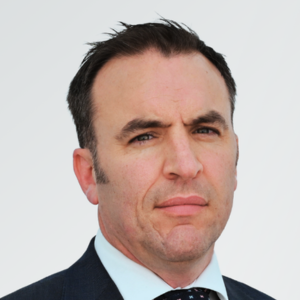
PM ‘allergic to accountability’ amid golf club scandal: Taylor
The Prime Minister is being accused of having a “deep character flaw” and being “allergic to accountability” following the latest revelations in the Marrickville Golf Club controversy.
On Thursday, officials appeared to contradict Anthony Albanese’s previous statements on the value of an honorary membership he was given and his role in approving a grant for the club located in his seat of Grayndler.
“The problem with the Prime Minister is he can never fess up to it,” Opposition Leader Angus Taylor told News24 on Friday.
“He’s allergic to accountability on the Marrickville Golf Club, he’s allergic to accountability on the economy – on five interest rate increases over the course of this year, the home-grown inflation that he has driven, he just will not accept it”.
“This Prime Minister has a deep character flaw which is now affecting, in a serious way, his ability to govern this country,” Mr Taylor added.
Burke claims royal commission didn’t request evidence from ministers
The Albanese government says it’s not responsible for the lack of cabinet minister appearances at the anti-Semitism Royal Commission, insisting Commissioner Virginia Bell made no requests for evidence.
The anti-Semitism and Social Cohesion Royal Commission will deliver its findings next week, but did not hear from the Prime Minister, Home Affairs Minister Tony Burke or other Labor figures appearing in their roles as members the Albanese government.
Asked about the lack of government representation, Mr Burke said there was “nothing in the terms of reference that determined” their non-appearance.
“If at any point the Royal Commission wanted any evidence to be given by any minister, it would have been provided and provided immediately,” he told reporters in Sydney.
“The whole concept of a royal commission is that you have an independent commissioner make the decision as to which evidence they believe is going to provide what they need to give recommendations to keep Australians safe.
Home Affairs Minister seeks urgent briefings on Microsoft outage
Home Affairs Minister Tony Burke says he has received briefings Australia’s Cyber Security Coordinator Lieutenant General Michelle McGuinness, and Microsoft about a massive IT outage, which he says authorities do not believe to be a deliberate attack.
Microsoft has been hit with a widespread global outage as users face disruptions across its online services including Outlook, Microsoft Teams, OneDrive and Copilot.
“They believe that they’re dealing in some ways similar to what we saw with respect to CrowdStrike, where there is an update that has that has gone awry,” Mr Burke told reporters in Sydney.
“One of the things that we had with CrowdStrike was we then had a whole lot of downstream impacts where it was affected the capability of a whole range of other products quite separate from that”.

NAB chief says AI biggest change since industrial revolution
NAB chief executive Andrew Irvine says AI will have the biggest effect on society since the industrial revolution.
The head of Australia’s biggest business lender, however, denied artificial intelligence was behind last month’s move to retrench 2500 staff or 6 per cent of its global workforce by mid-2027.
“While NAB’s recent workforce changes were not driven by AI, we must acknowledge the reality that artificial intellligence will ultimately have implications for the future workforce in banking and any other industry,” he told the House of Representatives economics committee.
“This will include adapting to rapid technological change such as artificial intelligence which will be as consequential to how we all live and work as any previous industrial revolution.
“When used responsibly, AI improves customer and colleague experiences, increases productivity and helps colleagues spend me time serving customers.”
He began his evidence to MPs noting the Reserve Bank’s five rate hikes this year were hurting borrowers as businesses absorbed higher wholesale costs.
“Many of our customers are managing but many are finding it tougher,” Mr Irvine said.
“Families are watching household budgets closely while businesses are absorbing higher input costs.”

Carroll at risk of losing seat as poll shows Wilson on track for leadership
Victorian Premier Ben Carroll is at risk of losing his own seat at the State election, as the Coalition extends its primary vote lead over Labor with just over two weeks to go until polling day.
A new poll out on Friday shows Opposition Leader Jess Wilson is on track to lead the Liberal-Nationals coalition to a win at the November 28 election.
The second Lighthouse election tracking poll conducted by News Corp Australia’s Growth Intelligence Centre shows Labor’s primary vote has fallen one point to 21 per cent, while the Coalition has risen one to 32 per cent, the Herald Sun reported.
One Nation’s primary vote was stable at 23 per cent, as was the Greens at 14 per cent and ‘others’ sitting at 10 per cent.
The net favourability ratings of both Mr Carroll and Ms Wilson have improved as the campaign continues, but Ms Wilson is significantly more popular, sitting at +17 while Mr Carroll trails on -19.
Meanwhile, bookmaker Sportsbet has shortened the odds of Mr Carroll retaining his seat of Niddrie in Melbourne’s northwest, pushing him out to paying $2.80 against the $1.45 for the Liberals.
The poll comes as the Coalition and One Nation on Monday resolved to preference each other ahead of Labor on how-to-vote cards in key seats across the state, a move which could mean deeper losses for Mr Carroll.
The Coalition would benefit from One Nation preferences in battles against Labor, while Pauline Hanson’s party could take over Labor in seats where the Coalition doesn’t finish in the top two in the voting count.
with NCA Newswire

Banking bosses appear before MPs on day two of inquiry
The chief executives of NAB and Commonwealth Bank are appearing before a parliamentary inquiry in Canberra on the day variable interest rates rise.
National Australia Bank CEO Andrew Irvine has begun giving evidence at Parliament House as the head of Australia’s biggest business lender.
His Commonwealth Bank counterpart Matt Comyn is taking questions on Friday afternoon.
The second day of the House of Representatives economics committee into the big four banks is being held on a Friday the 13th as Australia’s biggest lenders pass on the Reserve Bank’s latest 25 basis point increase.
ANZ chief executive Nuno Matos and his Westpac counterpart Anthony Miller appeared on Thursday.
Get the latest news from thewest.com.au in your inbox.
Sign up for our emails